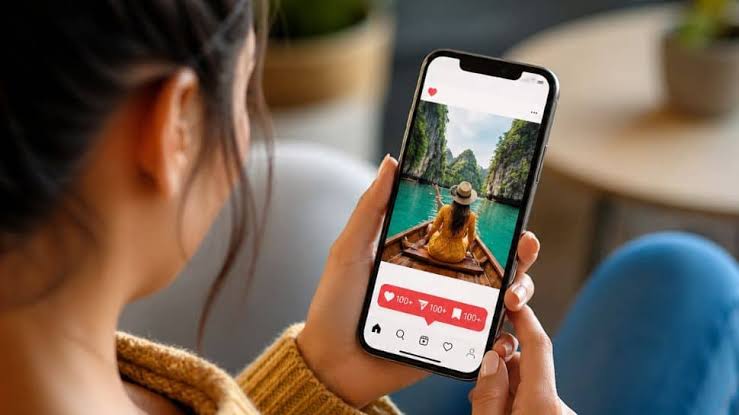
Location can make a big difference in how relevant Instagram content feels.
A restaurant in Delhi, a salon in Jaipur, a photographer in Mumbai, and a travel creator posting from Goa may all benefit from helping people understand where their content is connected.
This is where location tags can become useful.
A location tag gives additional context to a post or Story. It can help viewers understand where something happened and may make the content more relevant to people interested in that place.
What Is a Location Tag?
A location tag identifies a place connected to your content.
That could be:
- A city
- A neighborhood
- A restaurant
- A tourist attraction
- A shopping area
- A hotel
- An event location
For local businesses and location-based creators, this information can be especially useful.
Why Location Matters
Imagine someone searching Instagram for things to do in Jaipur.
A Reel showing a beautiful local market may be more relevant to that person than the same type of Reel with no location context.
The location helps answer an important question:
Where is this?
That simple piece of information can change how useful a post is.
Local Businesses Can Benefit From Context
Suppose you run a salon in a specific city.
Instead of posting:
“New haircut available.”
You could make the content more locally relevant:
“Easy summer haircut ideas for women in Jaipur.”
The location gives the content a clearer audience.
A person living nearby may be more interested than someone thousands of kilometers away.
Travel Creators Can Use Location Naturally
Location tags are also useful for travel content.
Imagine a creator posts:
“Three peaceful places to visit in Udaipur.”
Adding the relevant location context makes the post easier to understand.
It can also help organize travel content around destinations.
A creator could create separate content for:
- Udaipur
- Jaipur
- Jodhpur
- Manali
- Goa
This gives followers a clearer travel library.
Do Not Add Random Locations
A location tag should accurately describe the content.
Adding a famous tourist destination to unrelated content simply because it is popular can confuse viewers.
For example, if you are actually filming in your local neighborhood, use a location that makes sense.
Accuracy builds trust.
Think About Local Search Intent
Location-based searches often have strong practical intent.
People may search for:
- Restaurants near me
- Things to do in a city
- Hotels
- Shopping areas
- Salons
- Gyms
- Cafes
- Tourist attractions
Creators and businesses can create content around these real questions.
For example:
“Three affordable breakfast places in central Jaipur.”
“Best indoor activities for families in Delhi.”
“Simple weekend itinerary for Udaipur.”
These topics naturally combine subject and location.
A Real World Example
Imagine a small bakery in Lucknow.
Its Instagram account originally posts:
“Fresh cake today.”
That is fine, but it provides limited context.
The bakery begins creating more location-specific content:
“Custom birthday cakes in Lucknow.”
“Three popular cake flavors for birthday parties.”
“How to choose the right cake size for a family celebration.”
The location is now part of the content strategy.
People nearby can immediately understand the relevance.
Location Tags Are Not a Substitute for Good Content
This is important.
Adding a location tag will not automatically make a weak post successful.
If the video is boring, the information is unclear, or the presentation is poor, a location cannot fix everything.
Think of location as additional context.
The main content still needs to provide value.
Combine Location With Useful Information
A location becomes more useful when paired with practical details.
Instead of simply posting:
“Goa.”
Try:
“Three quiet beaches to visit in Goa during the early morning.”
Now the viewer gets both location and information.
That creates a stronger reason to watch.
Use Location in Captions When It Makes Sense
A creator can naturally mention the location in the caption.
For example:
“Planning a weekend in Jaipur? Here are five places you can cover without rushing.”
This makes the subject obvious without forcing keywords.
Keep the language natural.
Local Content Can Build Community
Location-based content can encourage people to participate.
Ask:
“Which part of Delhi are you watching from?”
“Which cafe should I try next in Pune?”
“What’s your favorite weekend spot in Goa?”
These questions can produce local conversations.
They may also help creators discover new content ideas.
Do Not Overpromise
Local businesses should be particularly careful about accuracy.
If you say something is “the cheapest” or “the best,” you need to be able to support that claim.
It is often better to say:
“An affordable option for…”
or
“A popular choice for…”
Honest descriptions are easier to maintain.
Track What Local Content Does
Compare location-specific posts with general posts.
Track:
- Reach
- Profile visits
- Shares
- Saves
- Comments
- Messages
- Follows
A local business might discover that posts mentioning specific neighborhoods generate more profile visits.
That is useful information.
Use Location as Part of a Larger Strategy
Location tags work best when they are connected to the actual content.
A local creator can combine them with:
- Local guides
- Reviews
- Tutorials
- Events
- Community questions
- Behind-the-scenes content
- Customer stories
The location gives context while the content provides value.
The Practical Lesson
If your content is connected to a real place, do not hide that information.
Tell people where the story, business, event, restaurant, attraction, or experience is happening.
For someone searching for local information, that small detail can make the difference between irrelevant content and something genuinely useful.
Location tags are not a magic growth button.
They are simply another piece of information that can help the right people understand and discover relevant content.